
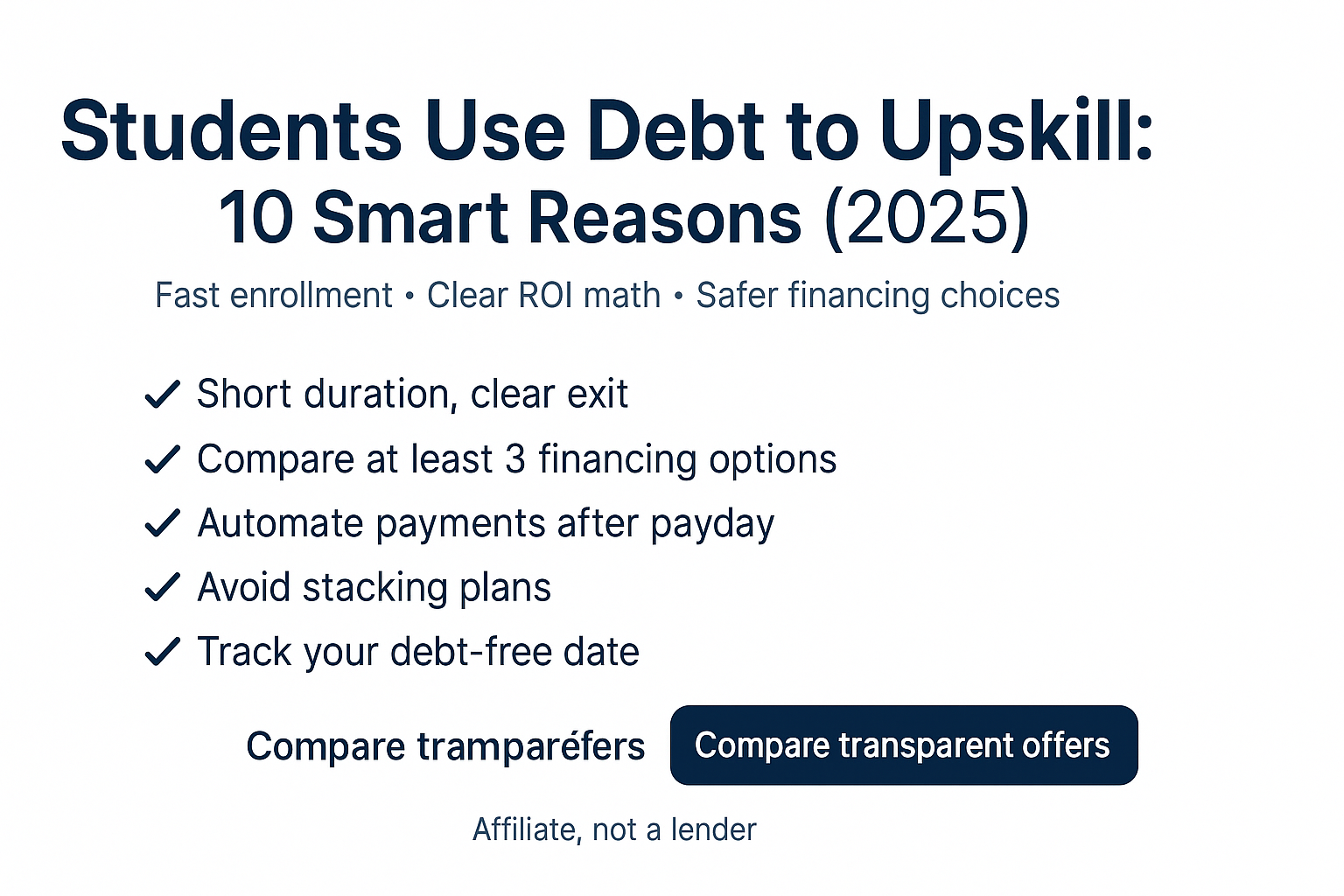
Students use debt to upskill in 2025 for speed, flexibility, and better job options—but not all financing is equal. Used well, education loans or short personal loans can bridge timing gaps and fund high-ROI courses. Used poorly, they create payment stress, fees, and a 2026 debt hangover. This guide explains the smartest reasons students borrow to upskill—and the exact rules to stay safe.
Why students use debt to upskill: 2025 reality
- Enrollment speed & access. Cohorts fill fast; financing lets you enroll now instead of missing an intake cycle.
- Timing gaps. Aid, scholarships, or family support may arrive after tuition is due; short-term credit can smooth cash flow.
- High-ROI niches. Targeted credentials (data, cloud, UX, healthcare tech) can improve earnings faster than waiting for savings to accumulate.
- Modular learning. Stacking certificates and bootcamps requires flexible, bite-size funding rather than one big lump sum.
10 smart reasons students use debt to upskill (with caveats)
1) Career pivot with measured ROI. A short program leads to internships or entry roles sooner; compare expected salary uplift to total cost.
2) Bridge funding before aid disburses. If grants/aid are delayed, a small, short-term loan prevents missing the start date—only if repayment is clear.
3) Skills premiums are time-sensitive. Certifications renew rapidly; waiting a year may dilute employer demand.
4) Co-op or apprenticeship deadlines. Fast enrollment unlocks paid placements that offset loan costs.
5) Geographic mobility. Remote programs allow upskilling without relocation; financing covers tuition plus modest equipment.
6) Portfolio requirements. Quality projects need tools, datasets, or lab fees; a small loan funds the setup to win interviews.
7) Scholarship matching. Some scholarships require enrollment first; financing helps you qualify on time.
8) Bundled career services. Certain providers include coaching, mock interviews, and referrals that accelerate job search.
9) Wage growth compounding. A 6–12-month head start in a higher-pay trajectory compounds over years.
10) Credit-building potential. On-time payments to installment loans can support credit history (missed payments harm it).
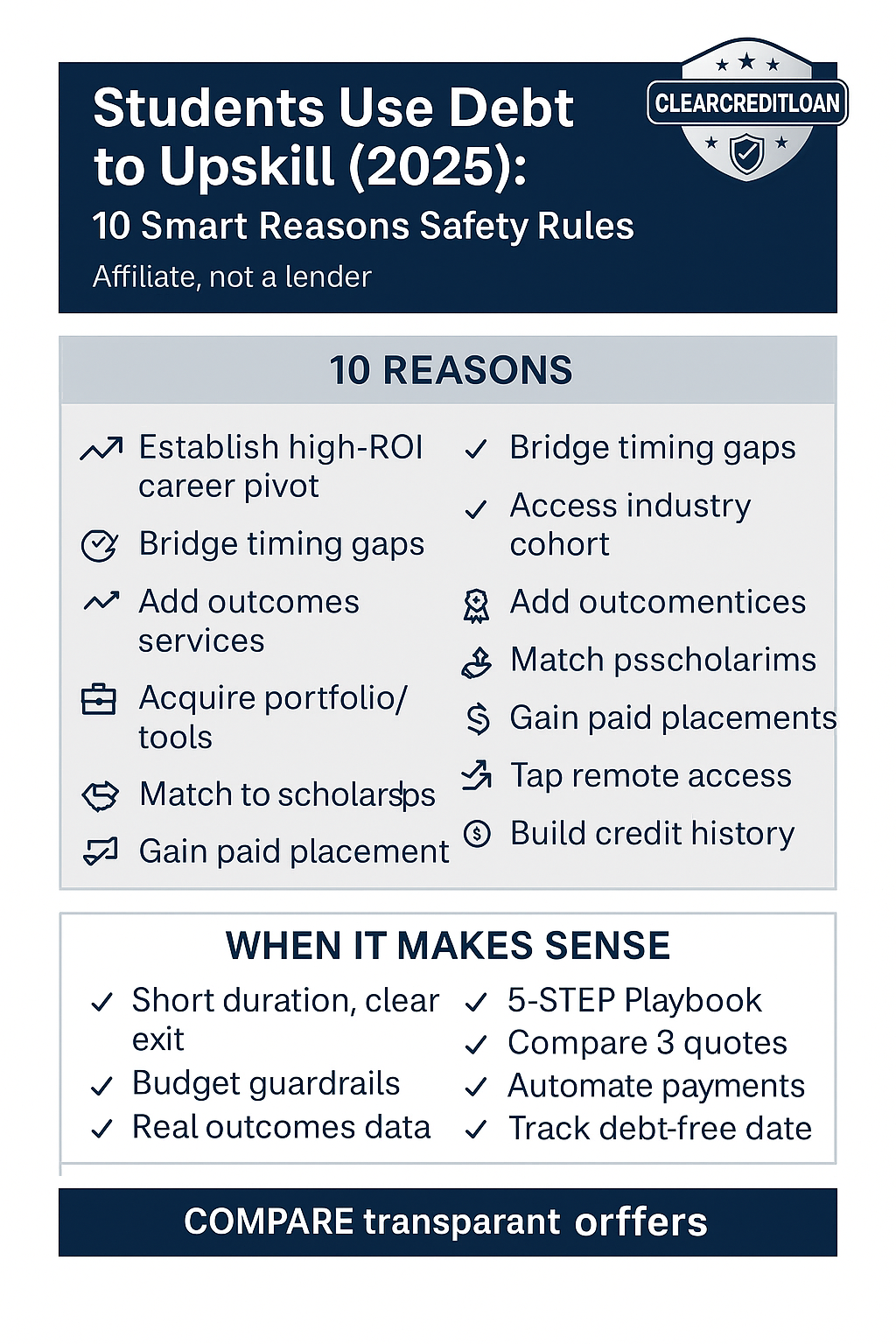
When using debt to upskill actually makes sense
- Short duration, clear exit. You can repay within months (or on a fixed plan) and have a realistic start salary or assistantship lined up.
- Transparent cost. You know the APR, fees, schedule, and total repayment; you’ve compared at least three options (education loan, short personal loan, BNPL-style installments).
- Budget guardrails. Essentials (rent/food/transport/insurance) stay protected even in a lean month. See How to Budget and Save Money for a simple framework.
- Realistic ROI. Skills are in demand, completion rates are strong, and outcomes data (placement/salary) are credible—ask providers for audited or verifiable stats.
Financing options: education loan, personal loan for online course, or BNPL?
- Education loan (incl. credit-builder/secured). Predictable reporting; often lower APR than retail financing; may offer in-school deferment.
- Personal loan for online course. Fast approval and fixed payments; best when APR + fees clearly undercut credit card rates and the term is short. See Personal Loan for Online Course for a focused comparison.
- BNPL for tuition. Useful for small, 6–8-week modules if you enable autopay and avoid stacking across providers; watch late-fee policies and reschedule charges.
Traps to avoid (how smart plans go wrong)
- Stacking plans. Multiple BNPL tabs + a loan → due-date collisions. Choose one instrument per cohort.
- Very long terms. Lower monthly payment can balloon total interest—pick the shortest affordable term.
- Opaque outcomes. Providers without verifiable placement/salary data raise risk.
- Ignoring credit mechanics. Hard inquiries can cause a small, temporary dip; on-time payment history matters far more over time.
A simple 5-step playbook for responsible borrowing (students)
1) Cap the budget. Tuition + tools + exam fees + a 10% buffer; stop at the cap.
2) Compare three quotes. Education loan vs personal loan vs BNPL; include origination/late fees and prepayment rules.
3) Automate payments the day after payday, stipend, or GA/RA disbursement; add calendar nudges 3–5 days prior.
4) Route windfalls to principal. Scholarship top-ups, tax refunds, or freelance income should prepay principal immediately.
5) Track your debt-free date. Recalculate after each extra payment; seeing the finish line prevents drift. For how payments reduce principal vs interest, see How Amortization Works.
FAQ: students use debt to upskill in 2025
Will borrowing wreck my credit? Not if you pay on time and keep other utilization low. Missed payments can be damaging.
Is BNPL safe for tuition/equipment? Only for small carts and short timelines with autopay; never stack multiple providers.
What about ROI? Use conservative salary scenarios, check alum reviews, and prioritize programs with transparent, third-party-verified outcomes.
Federal vs private? Federal student aid can be preferable for degree pathways; for short non-degree programs, compare reputable private options carefully. For official guidance on student loans and repayment basics, see the Consumer Financial Protection Bureau
We’re an affiliate, not a lender. Compare transparent offers by APR, fees, and term; pick the shortest affordable plan that fits your budget. If you can’t cash-flow a module in 6–8 weeks, a small fixed-rate loan may be safer than revolving balances—just automate payments and avoid stacking.