
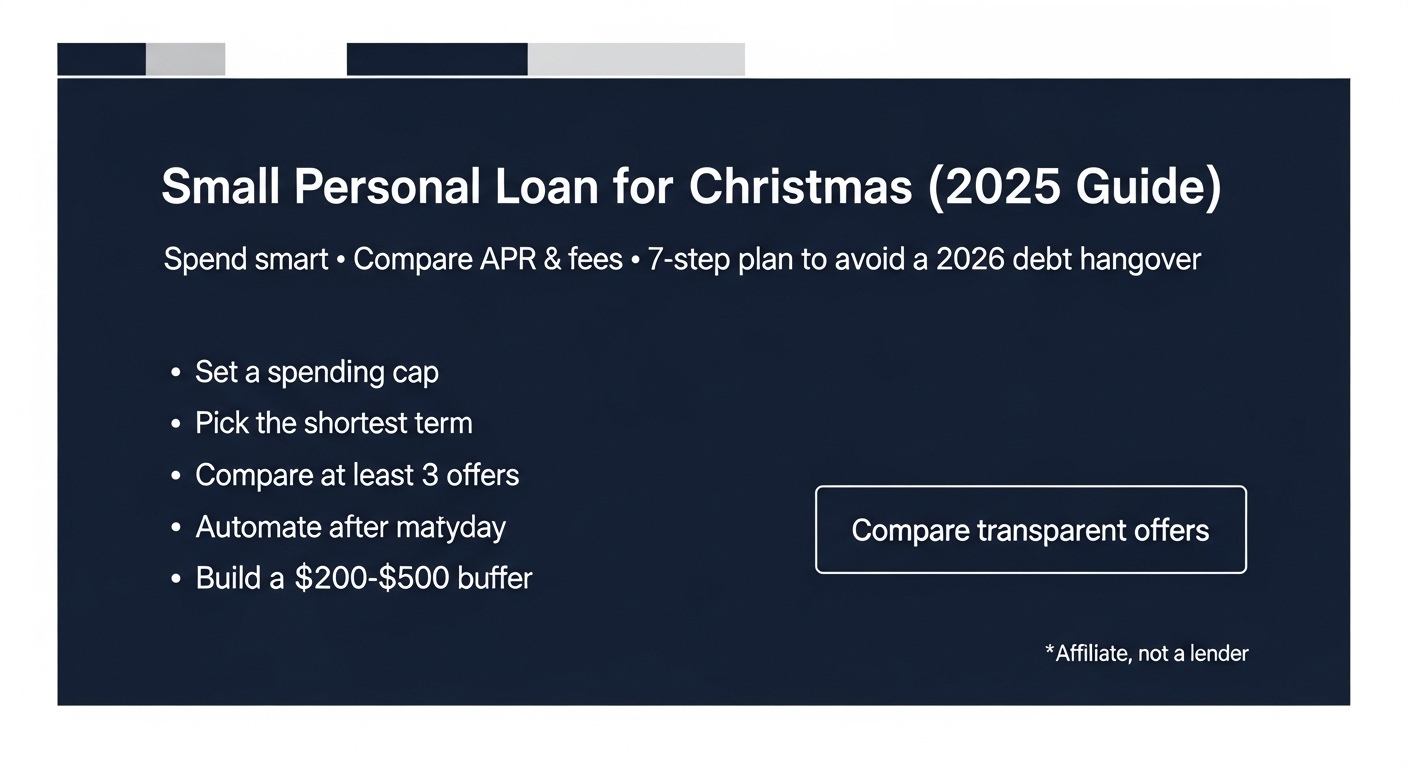
A small personal loan for Christmas can help you cover gifts, travel, or hosting without chaos—if you set strict rules. Used carelessly, it becomes a January shock and a 2026 debt hangover. This guide shows you how to borrow responsibly, price APR vs fees, and build a payback plan that protects your budget.
When a holiday personal loan can make sense
A small installment loan may be reasonable if: (1) you have a clear list of essential seasonal expenses, (2) your budget is temporarily tight but stable overall, and (3) the fixed payment fits without crowding rent, food, transport, or insurance. Predictable payments and a defined payoff date beat open-ended revolving debt—provided you stick to the plan.
Risks to avoid (so you don’t start 2026 behind)
- Over-borrowing “just in case,” then spending the cushion.
- Chasing the lowest monthly payment with a much longer term and higher total interest.
- Stacking new card balances after taking the loan.
- Ignoring fees that push the real APR higher than advertised.
APR vs interest: the holiday math that matters
APR includes the rate plus certain fees (e.g., origination), so it’s the fair way to compare offers. A “low rate” is not automatically cheaper if the APR or term inflates the total cost. For plain-English guidance on loans, see the CFPB’s consumer tools: https://www.consumerfinance.gov/consumer-tools/loans/
Your Holiday Loan Game Plan: 7 Steps
1) Define the spending cap before you apply. Price gifts, travel, food, decor, and shipping. Add a small buffer; that total is your maximum loan size.
2) Pick the shortest term you can comfortably afford. Shorter terms typically mean less total interest (payments will be higher).
3) Compare at least three offers on APR, fees, and term. Don’t ignore origination or prepayment penalties; they change the real cost.
4) Lock a zero-tolerance list. No new cards or BNPL tabs until the loan is paid.
5) Automate payments the day after payday. Protect your credit and avoid late fees; it also turns the plan into a habit.
6) Create a micro emergency buffer ($200–$500). This keeps a flat tire from becoming new debt in December or January.
7) Track progress weekly. Actual spend vs list; remaining balance vs schedule. Adjust early if you drift.

How to split your holiday budget (and stick to it)
Use a simple rule of thirds:
- 1/3 Gifts & wrapping
- 1/3 Travel & hosting
- 1/3 Food, experiences, and surprises
If your travel is already covered, shift the surplus to gifts or pay down the loan faster. Keep a running tally in your notes app and stop at the cap.
Smart sourcing: make the APR work for you
- Consolidate seasonal purchases into as few transactions as possible to avoid extra fees.
- Choose vendors with free returns or price guarantees; friction increases unplanned costs.
- If you receive cash gifts or year-end bonuses, route a fixed share (e.g., 50–70%) straight to principal.
Post-holiday repayment plan for 2026 (no hangover)
- January recalibration. Audit your December receipts and confirm the remaining principal.
- Choose a payoff lane: avalanche (highest APR first if you have multiple debts) or snowball (smallest balance for quick wins).
- Automate extra. Add a small recurring extra payment (e.g., $25–$100) beyond the minimum; it slashes interest over the term.
- Refinance only if total cost drops. If rates fall and there’s no hefty fee, refinancing to a shorter term can help—model the math first with an amortization view; see How Amortization Works.
- Keep credit clean. On-time payments and low utilization elsewhere prevent a score dip that could raise future borrowing costs.
Common mistakes that cause a 2026 debt hangover
- Treating the loan as a blank check—spending past the list.
- Extending to a much longer term to “feel comfortable.”
- Forgetting to include fees when comparing offers.
- Not automating payments; late fees erase any savings.
- Re-spending on credit cards while the loan is active.
FAQ: holiday personal loans
Is a small personal loan better than using a credit card? It depends on APR, fees, and behavior. A fixed-term installment can be cheaper and more predictable than a revolving balance—if you stop adding new card debt.
Will applying hurt my score? A hard inquiry can cause a small, temporary drop. On-time payments and a shorter payoff can offset that over time.
What if I can’t qualify for a good APR? Re-estimate your list, delay non-essentials, or scale the plan. You could also focus on budgeting tactics now; see How to Budget and Save Money.
We’re an affiliate, not a lender. Compare transparent offers on APR, fees, and terms, choose the shortest plan you can afford, and automate payments. Protect your essentials—and give yourself a calmer January.